Mattress Research · Construction Guide
Inside an Organic Mattress Core: What Layers Do and How to Compare Them
A mattress label may tell you what materials are present. It cannot, by itself, tell you how those materials are arranged, how thick they are, or how the bed will respond when you lie down. To compare organic mattresses intelligently, look inside the construction: layer by layer, from the support core to the comfort surface.
Published November 21, 2026
A mattress is often described by its headline ingredient: latex, cotton, wool, coils. But a material name is only the beginning of the story. The same material can behave differently depending on its density, thickness, position, and the layers surrounding it. A latex mattress with a thin comfort layer over a firmer base, for example, may feel quite different from one built with several substantial layers of latex.
The core is the structural center of a mattress. It helps carry body weight, limits excessive sinking, and contributes to the bed’s resilience—the way it pushes back and returns toward its original shape. Above it, comfort layers can soften the initial contact, help distribute pressure, or change the way the mattress responds to movement. In some designs, these roles are performed by distinct materials. In others, one material does much of the work throughout.
For shoppers comparing organic mattress construction, the practical question is not simply “What is it made of?” It is “What is each layer doing, and does that arrangement fit the way I sleep?” A useful comparison considers material, thickness, firmness, assembly, certification, and the support underneath the mattress. No single term on a label can settle all of those questions.
First, separate the core from the comfort layers
Mattress makers use construction terms in different ways, so “core” does not always describe an identical part of every bed. Broadly, the core refers to the main supportive structure. It may be a block or stack of latex, a spring unit, a foam base, or a combination of materials. Comfort layers sit above that structure and influence how the mattress feels at first contact and as the body settles into it.
That division is useful, but it is not absolute. A latex layer can provide both cushioning and support, depending on its firmness and where it sits. A pocketed spring unit can support the body while also allowing different parts of the sleep surface to move independently. Wool may appear in an upper upholstery layer, as part of a flame barrier, or in both roles. Construction descriptions should therefore be read as a map of functions, not as a promise that each material has only one job.
For a simple all-latex mattress, the core may consist of one or more latex layers beneath a fabric cover. A hybrid may pair springs with latex or other comfort materials. A crib mattress might use a firm support structure and a separate washable pad. These designs can all be described as having a core, but their structures and intended uses are not interchangeable.
The layers that shape the feel
Support layer: the foundation of the response
The support layer is the mattress’s main weight-bearing component. Its job is not simply to feel firm when pressed by hand. It needs to respond to the body across a sleeping surface, providing enough resistance to limit uncomfortable sinking while allowing the sleeper to settle into a natural position. How well it does that depends on the material and the design as a whole, including the comfort layer above it and the foundation below.
In an all-latex mattress, the support structure may be a single slab or several stacked layers. A single-piece core offers a straightforward construction. Multiple layers can allow the maker to vary firmness from top to bottom, or to let the owner rearrange or exchange layers in a customizable design. The number of layers alone does not establish quality or comfort; their thickness, firmness, and fit together matter more.
Comfort layers: the first point of contact
Comfort layers influence the surface feel and how pressure is spread. A softer upper layer may allow the shoulders and hips to settle more readily, while a firmer one may create a more buoyant or level sensation. But “soft” and “firm” are not universal measurements of comfort. A sleeper’s body shape, preferred position, and tolerance for pressure all affect the experience.
Some mattresses use separate comfort layers; others rely on the uppermost part of the core to provide both cushioning and support. This distinction is especially important when comparing product descriptions. If a mattress is called “all latex,” ask whether that means one latex layer, several latex layers, or latex over another support material. Then look for the thickness and firmness of each component rather than assuming the label describes the feel.
Cover, quilting, and protective components
The cover is not the core, but it is part of the mattress’s construction. Fabric, quilting, and any padding attached to the cover can alter the first impression of the surface. A mattress may also include wool or another material as a flame barrier. That component has a distinct purpose and should not automatically be counted as a comfort layer.
Protectors and pads are separate bedding accessories. They can affect the feel of the sleep surface, and a waterproof layer may change airflow or surface texture. If a mattress has a non-removable cover, care instructions matter: the mattress itself may not be washable even if the bedding placed over it is. Read the manufacturer’s directions before cleaning or adding a topper.
What different core materials can tell you
Latex
Latex is valued in mattress construction for its resilient response. It tends to recover after pressure is removed, creating a buoyant feel that differs from materials that compress more slowly. Its performance still varies with formulation, firmness, thickness, and manufacturing method. A latex label does not tell a shopper whether a particular mattress will feel soft, medium, or firm.
Some latex mattresses use Dunlop latex; others use Talalay latex, or combine the two. These names refer to different manufacturing processes, not simple grades that can be ranked without context. A comparison is more useful when it includes the actual layer arrangement and firmness options. If a description says a mattress can be customized, find out precisely what can be changed: layer order, material type, firmness, or configuration by side.
Springs
Innerspring and hybrid mattresses use a spring unit as a major support component. Pocketed coils are individually enclosed, allowing them to respond more independently than interconnected spring systems. The count of springs is only one detail. Coil design, gauge, layout, edge construction, and the comfort materials above the unit also affect the experience. A high spring count, by itself, is not a complete measure of suitability or durability.
Wool, cotton, and other natural fibers
Natural fibers may serve as cover fabrics, quilting, padding, or components of a mattress’s fire barrier. Their role depends on where they appear and how they are assembled. Wool is sometimes used in mattress construction for its resilience and moisture-handling properties; cotton is commonly used in fabrics and padding. Neither material’s presence alone explains how supportive the core is.
It is equally important to distinguish natural-material claims from organic certification. “Natural” and “organic” are not interchangeable terms, and a product may contain a mix of certified and non-certified components. Check what a certification applies to: a raw material, a textile, a finished product, or a manufacturing process. The scope of the claim is as important as the name of the material.
Read the layer diagram like a set of instructions
A clear construction description should let you picture the mattress without relying on adjectives. Look for the following details:
- Every component: Identify the core material, comfort materials, cover, quilting, and any fire barrier.
- Layer order: Confirm which materials sit above or below one another, and whether the mattress has a designated top side.
- Thickness: Find the depth of each layer as well as the mattress’s total height.
- Firmness options: Ask how firmness is described and whether options refer to individual layers or the finished mattress.
- Assembly: Determine whether layers are glued, stitched, enclosed, stacked, or accessible through a zipper.
- Care and orientation: Check whether the mattress can be rotated, flipped, or opened for rearrangement.
- Compatibility: Verify the recommended foundation, slat spacing, and any adjustable-base restrictions.
Missing information is not proof that a mattress is unsuitable. It is a reason to ask a more specific question. “Is it firm?” may produce a broad, subjective answer. “How many inches of each material are in the mattress, and what firmness options are available for each layer?” is more likely to reveal how the design works.
Why layer thickness and arrangement matter
Thickness changes how much a layer can influence the feel of the surface. A relatively thin comfort layer may provide a different degree of cushioning from a deeper one, even if both use the same material. A firmer layer placed near the top can create a different initial response from the same layer placed beneath a softer component. The interaction between layers—not just their individual labels—is what the sleeper experiences.
Arrangement also matters when a mattress is adjustable. A two-layer model may allow the owner to switch the order of its components, or to select different firmnesses. In a larger bed, some designs allow different configurations on each side. Those options can be useful, but they make it essential to understand what the exchange or customization policy actually covers, including time limits, fees, and which components can be changed.
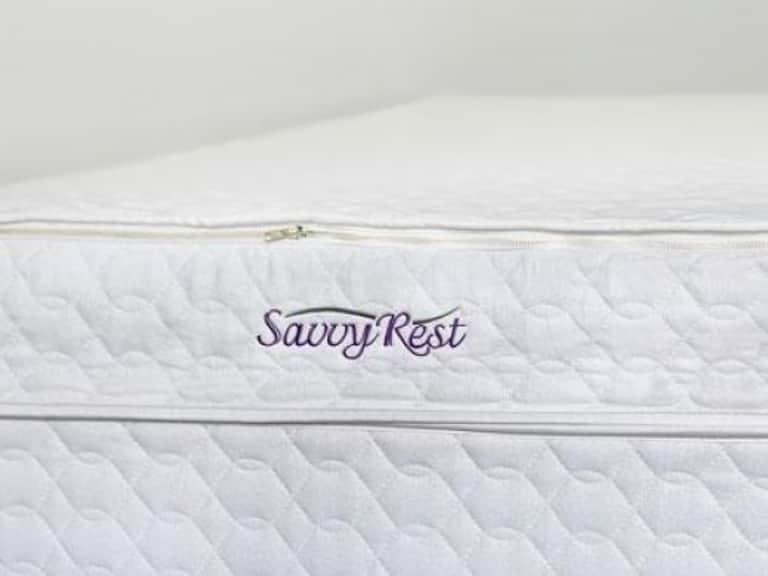
One example is the Savvy Rest Tranquility Latex Mattress, described as a seven-inch mattress with two three-inch latex layers and an organic cotton cover. Its construction is offered with Dunlop latex, Talalay latex, or a combination, and includes an organic wool flame barrier. The description identifies it as customizable, which makes the layer choices and exchange terms particularly relevant questions for a prospective buyer. Those specifications describe construction; they do not establish that the mattress will suit every body or sleep position.
Match construction to your own support needs
Sleep position is a useful starting point, not a verdict. Side sleepers often pay close attention to pressure at the shoulders and hips; back sleepers may focus on whether the surface feels balanced under the torso and pelvis; stomach sleepers may be especially sensitive to excessive sinking around the midsection. These are practical considerations, not fixed rules. Body shape, mobility, personal preference, and the mattress’s actual response all matter.
Think about what your current sleep surface does well and where it falls short. Do you feel pressure at a particular point? Do you find it difficult to change position? Does the bed feel too yielding, too rigid, or simply different from what you prefer? Those observations can help direct a comparison toward a softer upper layer, a more resilient feel, a different firmness configuration, or an entirely different construction.
Shared beds bring another dimension. Partners may have different preferences or body needs, so an option for split firmness can be worth investigating. Ask whether customization is available across the full mattress or only in certain sizes. Also consider motion: a responsive surface may make changing position easier, while a spring configuration or comfort layer can affect how movement travels across the bed. These characteristics should be evaluated as a whole rather than inferred from a single material name.
Organic claims need the same close reading
An organic mattress is not defined by one ingredient. It may combine organic latex, cotton, or wool with other materials, and certifications can cover different parts of the finished product. The reliable approach is to check the exact certification, its scope, and the components it applies to. If a product description uses words such as “organic,” “natural,” or “chemical-free,” look for specific supporting documentation rather than assuming those phrases mean the same thing.
Ask whether the cover is removable and whether removing it affects the warranty. Find out whether the fire barrier is made from wool or another material, and whether it is part of the mattress casing. If a cover cannot be washed, a separate washable protector may be a practical consideration—but it can change the feel of the surface, so include it when evaluating the bed.
Construction transparency is useful for more than verifying a label. It helps shoppers understand trade-offs. A design with more adjustable layers may offer flexibility but require decisions about configuration. A simpler one-piece core may be easier to understand but provide fewer opportunities to change its feel. Neither approach is inherently best. The right question is whether the available information and options meet your needs.
The foundation below the core is part of the equation
A mattress does not work in isolation. The foundation or bed frame supports it from beneath, and the wrong base can affect stability, ventilation, and warranty eligibility. Slatted bases should follow the mattress maker’s requirements for spacing and support. An adjustable base may be compatible with some models but not others. Check these details before purchase, particularly for a heavy latex mattress or a design that is not meant to bend.
Placement and upkeep matter too. Follow instructions for rotating or flipping the mattress, if applicable. Some models have a defined top and bottom and should not be flipped; others may allow layers to be rearranged. A zippered cover does not necessarily mean the cover is machine washable. Use the care guidance supplied for the specific construction rather than assuming that natural materials can be cleaned in a particular way.
A practical comparison checklist
When two organic mattresses sound similar, put their details side by side. A short checklist can turn marketing language into a more useful comparison:
- What is the principal support material?
- How many core and comfort layers are there, and how thick is each?
- What materials make up the cover, quilting, and fire barrier?
- Are the materials certified, and what exactly does each certification cover?
- Can firmness be selected or adjusted after delivery?
- What are the return, layer-exchange, and warranty terms?
- What foundation is required, and is an adjustable base permitted?
- How should the mattress be protected, cleaned, rotated, or stored?
Where possible, test a mattress under conditions that resemble your normal sleep. Spend enough time to notice how your body settles, and try your usual sleeping positions. A brief sit or hand press can reveal something about surface response, but it cannot reproduce a full night’s rest. For online purchases, read trial terms carefully: the length of a trial, return shipping, pickup arrangements, and exchange rules can differ substantially.
A better question than “What is the best organic core?”
There is no universally superior mattress core. A single latex slab, a stack of customizable layers, and a spring-based support unit each represent different construction choices. The meaningful comparison is between the design and the person who will sleep on it: their preferred feel, the support they need, the bed base they have, and the practical terms that govern care and adjustment.
Organic mattress cores become easier to understand once the layers are treated as a system. Identify the support structure. Map the comfort materials. Check thickness and arrangement. Separate the function of a cover or flame barrier from that of the core. Then weigh certification and service details alongside comfort—not instead of it.
The result is a more grounded way to shop. A clear layer description cannot predict every night, but it can replace vague impressions with useful questions. And when the construction is transparent, the decision becomes less about a label and more about whether the mattress’s actual design makes sense for you.
Frequently asked questions
Is the mattress core the same as the support layer?
The terms are sometimes used loosely. The core generally means the mattress’s main structural center, while the support layer describes a function. In some mattresses, the core is the support layer; in others, the core contains several components that share support and comfort roles.
Does more latex mean a softer mattress?
No. Feel depends on the latex formulation, firmness, thickness, layer position, and the rest of the construction. A mattress with several latex layers may feel firmer or softer depending on their specifications and arrangement.
Does an organic label guarantee that every component is organic?
Not necessarily. Certification may apply to particular materials or parts of a product. Check the certification details and ask which components are covered rather than assuming the label applies uniformly to the entire mattress.
Should I choose a mattress with adjustable layers?
Adjustable layers can offer flexibility, especially when preferences are uncertain or two sleepers want different firmness levels. They also require attention to configuration and exchange terms. Whether that flexibility is valuable depends on your circumstances and the options included with the mattress.
Can the foundation change how a mattress feels?
Yes. The base provides support beneath the mattress and can affect its stability and how it performs. Follow the manufacturer’s requirements for slat spacing, frame design, and adjustable-base compatibility.